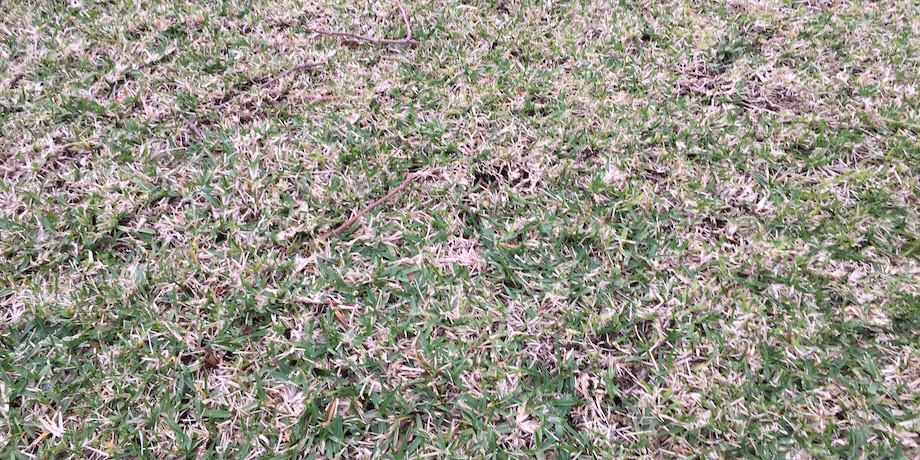
Australia has been living through an enormous nationwide lawn disease epidemic for almost two decades, starting off small and barely noticeable and snowballing into the disaster it’s since become. The primary culprit causing this lawn disease epidemic across Australia is the Sir Walter variant of buffalo grass. Sir Walter is extremely prone to developing lawn disease with an almost 100% chance for all Sir Walter lawns to outbreak all on their own, without any outside source of contamination. The epidemic of lawn disease around Australia now is because of the high take up of this one grass brand due to its persistent unrelenting advertising over decades, then these large volumes of Sir Walter lawns develop disease, and that disease then spreads onto all other lawn types.
For the first 8 years of my lawn mowing business I never saw a single case of lawn disease, until soon after I took on my first Sir Walter lawn, and soon thereafter as these lawns increased in volumes of sales and plantings I have seen a vast epidemic of lawn disease cursing this country, cursing my lawn mowing round, and ruing my every day that I have to deal with it. For me it’s been an unrelenting battle for about 15 years.
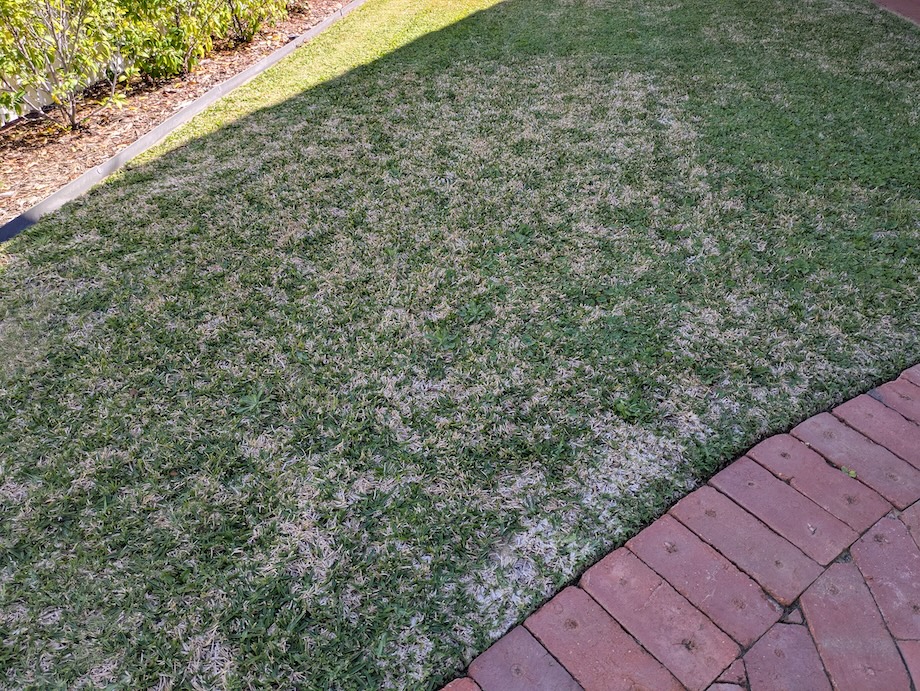
Lawn mowing contractors can and do spread lawn disease from one lawn to another. Mowing one diseased Sir Walter lawn and then using the same lawn mower on 8 more lawns that day can and will spread lawn disease onto any number of those lawns on that same day. Then if we used that same lawn mower tomorrow or next week without washing it, we would just keep spreading disease from lawn to lawn.
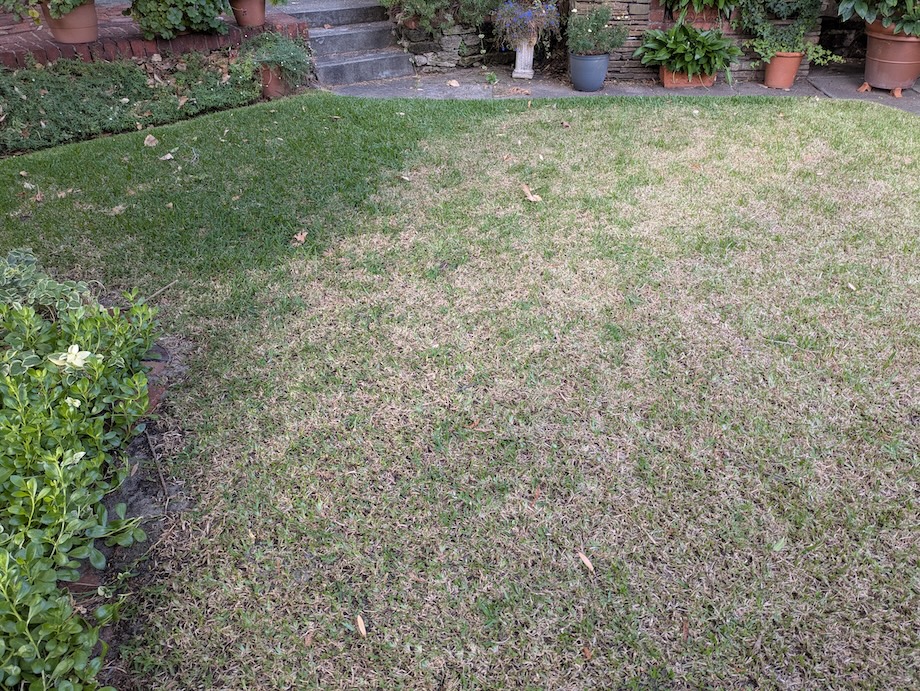
The modern lawn mowing contractor in Australia must be aware of the high risk that he presents as an agent for spreading of lawn disease. While all blame for this lawn disease epidemic lies solely on Sir Walter, it is the responsibility of the lawn mowing contractor to do everything he can to reduce and eliminate the risk of spreading lawn disease from diseased Sir Walter lawns onto other lawns in their rounds.
The Australian lawn mowing contractor must adapt to the lawn disease epidemic.
Understanding Lawn Disease In A Lawn Mowing Round
Back in the old days, in those first 8 years of my lawn mowing business, long before I ever saw lawn disease for the first time, I had to manage my round much the same way as I continue to do now.
Try to start at the properties which are furthest away from home in the early morning, then work your way back home during the day. This was the basic building block of how to manage our work days as lawn mowing contractors.
Next we might have some customers that might have had locked gates and garage doors, though that was still rare even not that many years ago. So we might need to work these jobs in for an early morning start at those distant locations.
Next, we would know which of our lawns were the best, and which were the worst, with the worst ones being covered in a lot of weeds. Then as well as possible, in-between those other two first factors, we would try to work out our days so that we would mow the best lawns first and the worst lawns last.
It was all so simple and obvious back then.
Managing diseased lawns in our rounds is rather similar to managing really weedy lawns in our rounds, though obviously lawn disease is a more devastating affliction than perhaps dropping a weed seed here or there. While we can mow a clean lawn after mowing a lawn with some weeds in it, we must never mow a clean lawn with the same lawn mower after we have mowed a diseased lawn, otherwise there is an extremely high risk of spreading lawn disease onto every other lawn we mow after the diseased lawn.
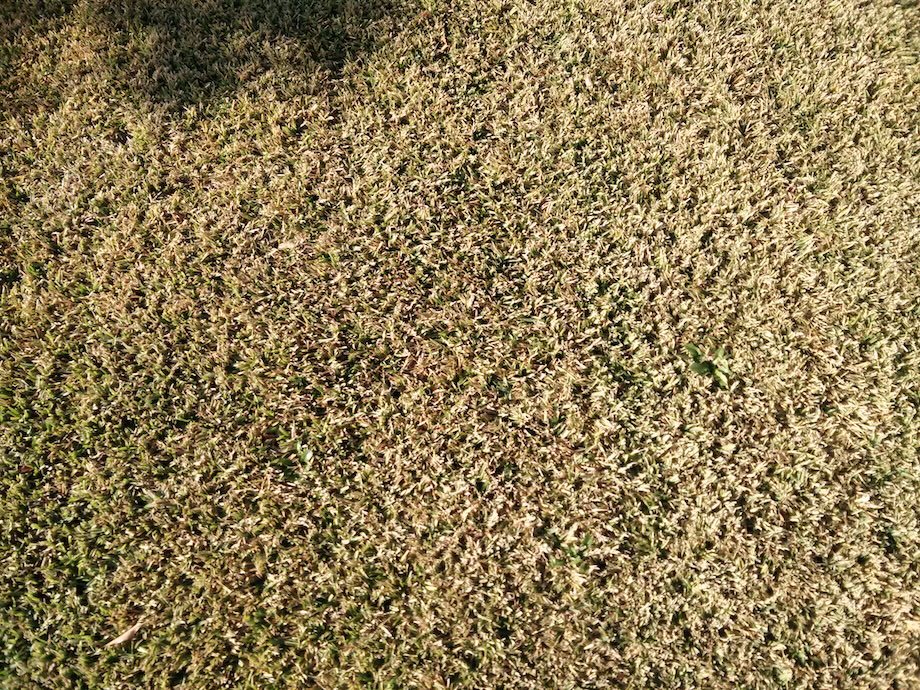
If we have mowed a single diseased lawn, then that lawn mower can infect other lawns with disease without end.
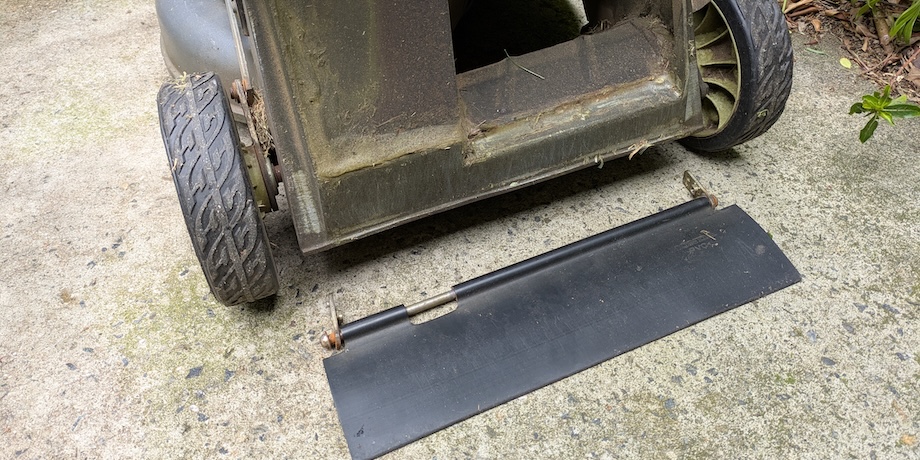
So can our lawn edger wheels, our line trimmer, our work boots, and so can that flap at the rear of our rotary lawn mower.
One lawn growing next to a diseased Sir Walter lawn can become infected. The owner or a neighbour walking across a diseased lawn and then onto their clean lawn, even if it’s their own front and back lawns, can also spread that disease.
We must be responsible as lawn mowing contractors in managing this lawn disease epidemic.
Managing Lawn Disease In A Lawn Mowing Round
Our first rule of thumb is that we must keep our lawn mowing equipment clean, everything needs to be thoroughly washed every day: lawn mower, line trimmer, blade edger, soles of work boots.
We need to try to isolate diseased Sir Walter and other diseased lawn types.
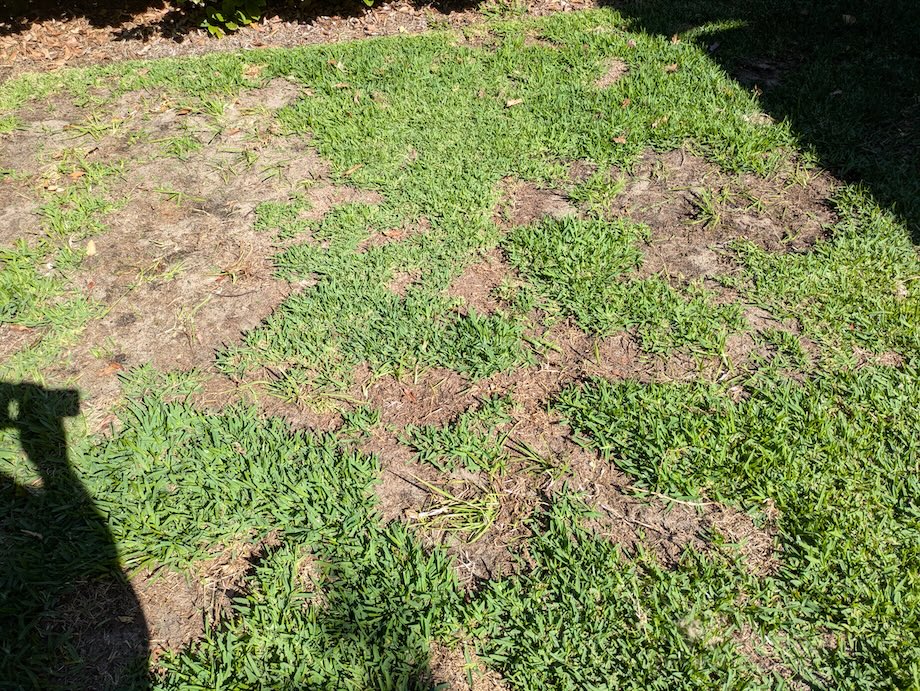
We can never take lawn mowing equipment from a diseased lawn onto a clean lawn.
We want to try to mow clean lawns first, and diseased lawns last as our primary rule, though this cannot always be done, therefore we must work around it as best we can.
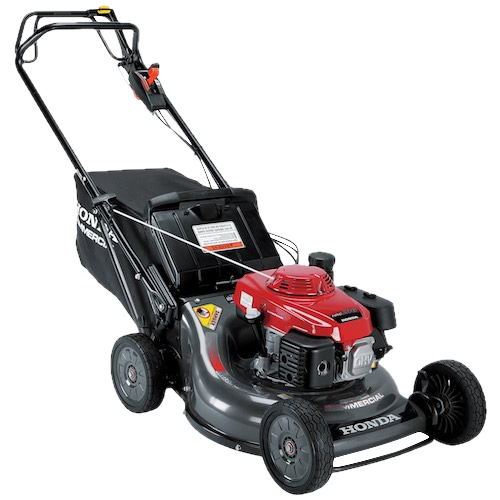
From experience over many years of dealing with this lawn disease epidemic, I can say that running 2 rotary lawn mowers has been the best option for me. I clearly mark each so they are easily distinguishable from each other as they are the same type, one rotary mower for diseased lawns and one rotary mower for clean lawns. I actually have separate rotary mowers for going up and down steps too, this means I have 4 rotary mowers.
I then try to do the best and clean lawns first in the day, using my clean rotary mowers.
Then as the day progresses I will have a mower for diseased lawns on board, so that I then switch to using that rotary mower instead of the clean one.
On 99% of days, because my round is so compact and close to home, I can get by just fine with 2 rotary mowers on board at a time, and a cylinder mower. If I do need to swap mowers then I just stop at home for 2 minutes for a changeover. In rare cases I will have to carry 3 rotary mowers if I have a combination of lawns with steps and larger lawns requiring the larger rotary mowers, and clean and diseased lawns which are further away from home.
If I have to mow diseased lawns first in the day, which sometimes I must do, then I will try to have other diseased lawns to do on the same day, preferably for the entire rest of the day.
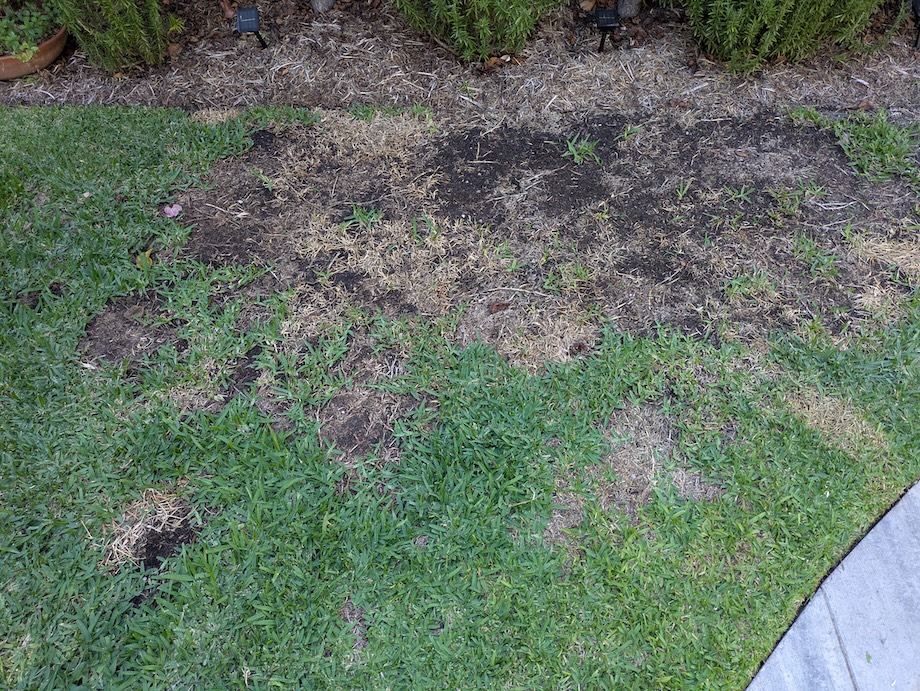
If I must mow diseased lawns first, and then I have clean lawns later, and if this cannot be adjusted for in any other ways, then once I have finished with the diseased lawns I will go home and wash all of my lawn mowing equipment, this includes the rotary lawn mower, the line trimmer, the blade edger, and the soles of my boots.
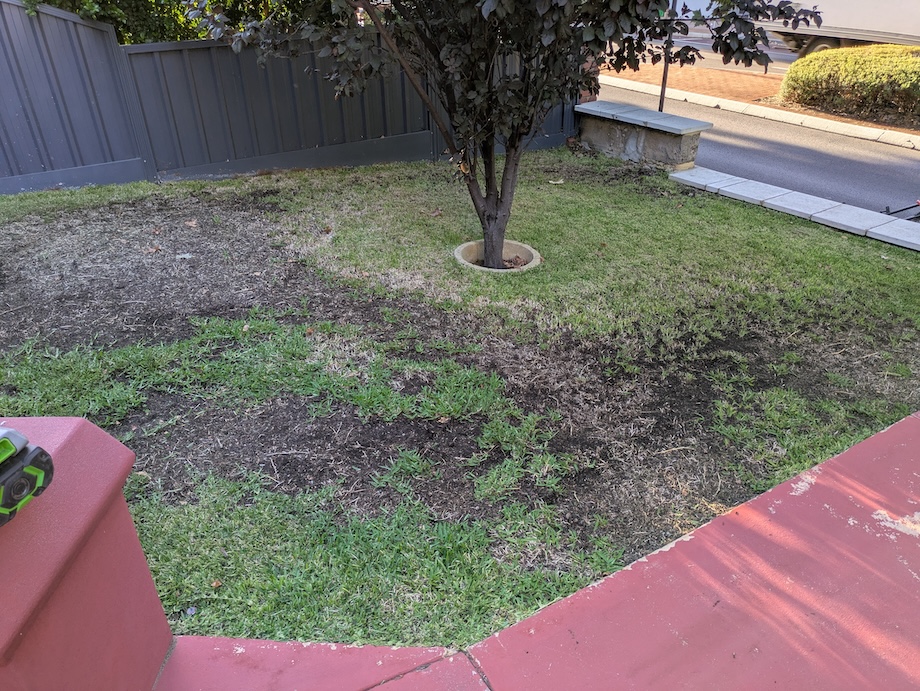
uneducated hardware store staff wrongly advice people to put black dirt onto diseased lawns
Before washing my mowing equipment clean, I will blow out the back of the van.
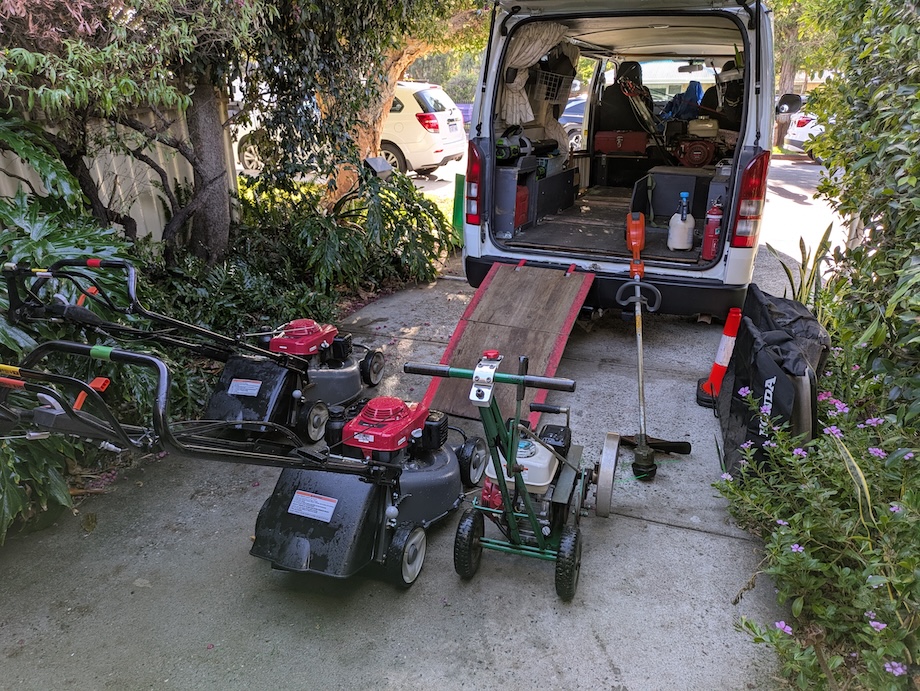
I then go back out to work to finish off the rest of my day.
If I come across a lawn which has succumbed to disease since my last visit, and this has thrown out my planning for my day of lawn mowing, then I might go home again and wash my lawn mowers again… I have no choice… I must work responsibly.
At the end of every day I do the same again, I empty out the lawn mowers and machines from the back of the van, I blow the van clean, I thoroughly wash my lawn mowers, blade edger, line trimmer, and work boots.
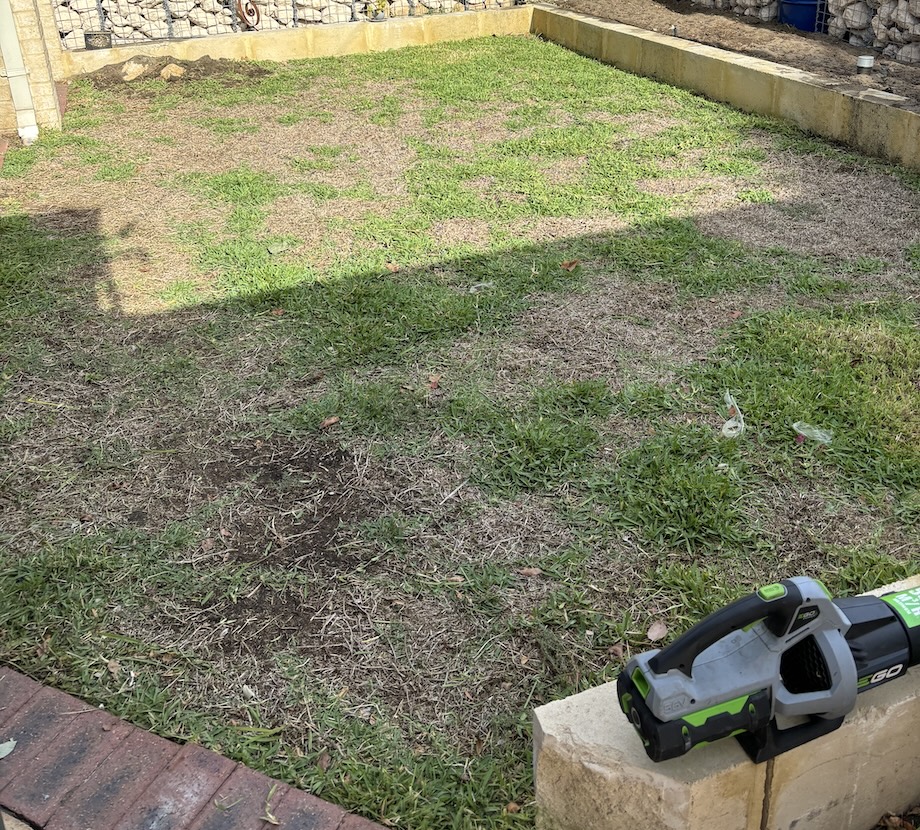
Due to the enormous cost of cylinder mowers, and how large they are to store, I don't keep multiple cylinder lawn mowers, if any lawn which I mow with a cylinder mower has become diseased, then I have no choice but to cancel that service, to protect my other customers lawns.
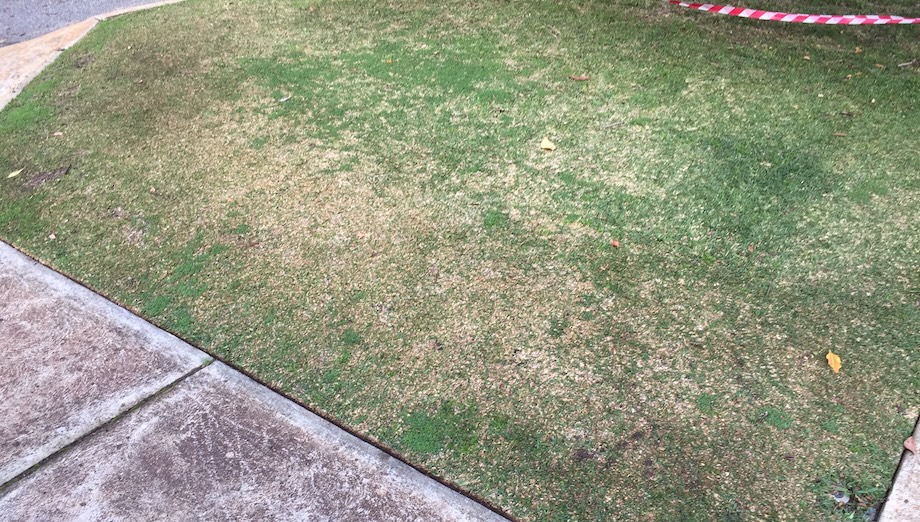
until one day the power company repaired their underground works
by planting a few patches of Sir Walter underneath the tree
within 3 months all lawns on this property were destroyed by lawn disease
as a cylinder mowed lawn I had no choice but to let it go - to protect my other customers
And that’s how I manage lawn disease in my lawn mowing round.
It’s a constant daily fight against an enemy that never surrenders.
It is my responsibility as a modern Australian lawn mowing contractor to isolate all diseased Sir Walter lawns to the best of my ability, to isolate my lawn mowing equipment, to wash clean my lawn mowing equipment constantly every day, and sometimes multiple times per day.
This is the way I live now, this is how I manage the Sir Walter lawn disease epidemic that is plaguing Australia and leaving in its wake never ending plethora of destroyed lawns of all types.
all articles and images are © copyright
thelawnmowingman.com